Accepting an electrical installation is not a formality. It is the moment where you find out whether the work was actually done correctly, or whether it merely looks correct. Many developers and project managers sign off on projects without knowing what to check, only to discover problems months later when the cost of correction has multiplied significantly.
A proper handover is not only about technical correctness. It is about documentation, traceability, and long-term operational integrity. Without the right deliverables, a building is handed over with invisible risks: unlabelled circuits, measurements that were never taken, systems that appear to work but have never been formally tested.
This guide provides a practical checklist for developers, civil engineers, and project managers who want to accept an installation with confidence, not with assumptions.
Why Handover is the Most Critical Stage
Many projects invest heavily in design and construction, then treat the handover as a formality. That is a costly mistake.
The handover phase is the only opportunity to verify that what was designed was built correctly, that all systems perform as specified, and that the documentation exists to support future maintenance and modifications. Without this, the new owner or operator inherits what is effectively a black box.
The 6 Categories of Deliverables You Must Request
1. As-Built Drawings
As-built drawings record the actual state of the installation, not the original design. They show exactly where cables run, where panels are located, and how every circuit is connected.
What to request:
- Power electrical drawings including single-line diagrams
- Floor plans showing cable routing and containment paths
- Panel drawings with full circuit schedules
- Low-current system drawings for data networks, CCTV, fire detection, access control where applicable
Without as-built drawings, any future modification or upgrade starts from zero.
2. Measurement and Testing Protocols
Every electrical installation must pass specific measurements before handover. These are not optional extras. They are the documented proof that the installation is safe.
What to request:
- Insulation resistance measurements per circuit
- Earth resistance and equipotential bonding measurements
- RCD testing records
- Loop impedance measurements
- Discrimination verification for protective devices
- For industrial installations: motor testing records, drive commissioning, UPS test reports
If the contractor cannot produce these protocols, it means the measurements were not carried out.
3. Commissioning Report
Commissioning is the formal process of verifying that every system performs according to its specification. It is not enough for the lights to come on. Every scenario must function correctly and be recorded.
What to request:
- Commissioning report for power systems
- Commissioning report for BMS, KNX, or other automation systems
- Verification of lighting scenes, HVAC control, energy monitoring scenarios
- Test records for life safety systems: fire alarm panel test, CCTV coverage verification
- Signed commissioning acceptance by the client representative and contractor
4. Panel and Circuit Labelling
Labelling is not an aesthetic consideration. It is a matter of safety and operational efficiency. On every panel, it must be immediately clear which breaker controls which circuit.
What to request:
- Full circuit labelling on every panel using printed labels, not handwritten notes
- Circuit schedule displayed inside each panel door
- Cable labelling at critical points including terminations, junction boxes, and rack connections
- For data and low-current systems: full patch panel labelling and port allocation records
5. Equipment Technical File
Every piece of installed equipment has its own manual, specifications, and maintenance schedule. Without these, no technician can service the installation properly in the future.
What to request:
- Data sheets and operation manuals for all major equipment including panels, UPS, relays, and inverters
- Programming manuals and backup files for PLC, BMS, and KNX systems
- Equipment schedule with serial numbers and model references
- Warranty documentation for materials and equipment
6. Electrical Installation Certificate (ΥΔΕ)
In Greece, the formal installation certificate is the ΥΔΕ (Υπεύθυνη Δήλωση Εγκαταστάτη). This is the legally required document confirming that the installation complies with applicable regulations including ELOT HD 384 and ELOT EN 60364. Without it, the installation cannot be energised and is not legally compliant.
What to request:
- Signed ΥΔΕ from the licensed electrical installer
- Copy of the installer's licence
- Compliance declaration with ELOT HD 384 and ELOT EN 60364 where applicable
On-Site Verification Checklist
Beyond documentation, there are items to check visually and functionally during the handover inspection:
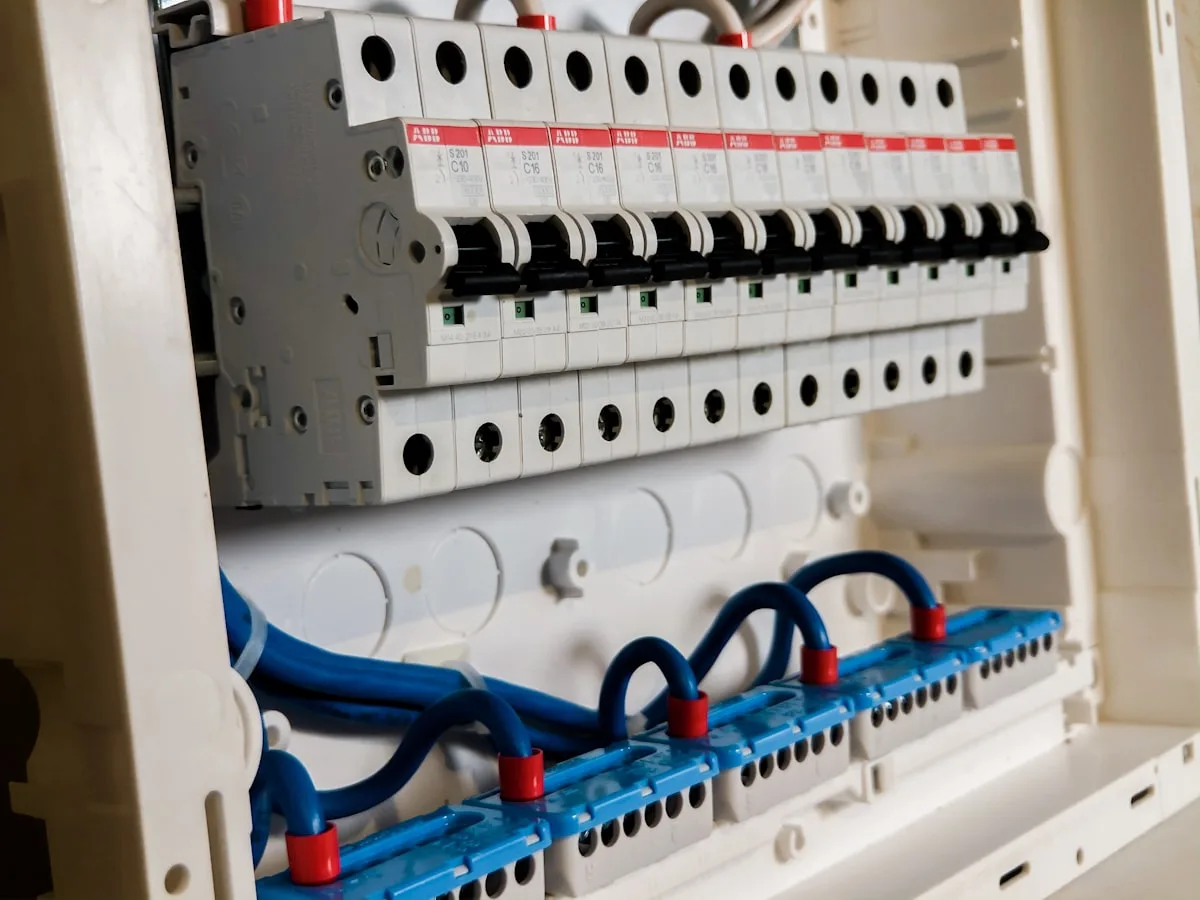
- Panels: clean wiring, no loose ends, all covers fitted and secured
- Containment: conduits and cable trays properly fixed, no mechanical damage
- Earthing: visible connections to foundation earth electrode
- Lighting: every fitting operates correctly in every programmed scene
- Emergency systems: emergency lighting functioning, exit signage illuminated, fire panel showing clear status
- Smart systems: every programmed scenario tested and documented before sign-off
What It Costs to Accept an Installation Without Proper Documentation
A developer who accepts without documentation faces three specific risks.
Risk 1: Maintenance without a map. When something fails, no one knows where anything is. The next technician charges hours simply to map out what should have been delivered as documentation.
Risk 2: Legal exposure. Without a ΥΔΕ and testing protocols, in the event of an incident, liability may fall on the property owner rather than the contractor.
Risk 3: Asset value erosion. A building without documentation is harder to insure, harder to sell, and harder to certify for future energy or smart building upgrades.
Frequently Asked Questions
The ΥΔΕ is legally required for any installation connected to the grid in Greece. Testing protocols are required under [ELOT HD 384](https://www.elot.gr) and ELOT EN 60364. As-built drawings and commissioning reports are not always legally mandated, but they are essential for anyone who wants to accept an installation safely and manage the asset correctly over time.
This is a serious warning sign. Testing protocols are the documented proof that the installation is safe. Their absence means either the tests were not carried out, or the results revealed problems. In either case, do not accept the installation until this is resolved.
For a standard residential property, the commissioning scope is simpler. However, for a [high-specification home](/en/ypiresies) with KNX, smart lighting, EV charging, and structured cabling, a basic commissioning report confirms that every scenario functions correctly and protects both the owner and the installer.
Need a technical assessment for your project?
Get in touch