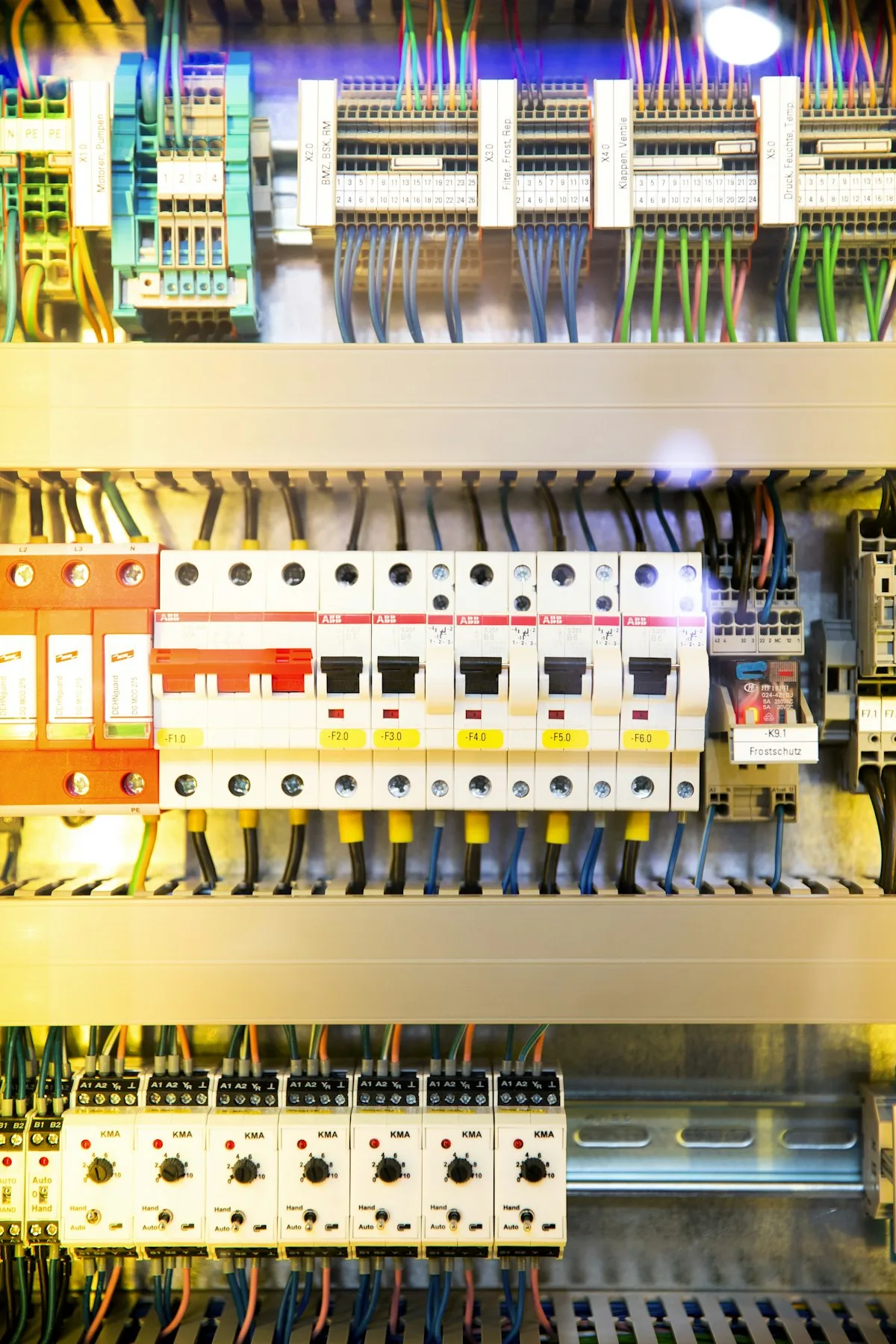
When you begin designing a building, the electrical study lands on the table early. Yet a surprising number of architects and civil engineers routinely use the terms "strong currents" and "weak currents" without a precise understanding of what each defines, where one domain ends and the other begins, or why this distinction has direct consequences for floor plans, conduit routing, and project budgets.
This article is written exactly for those professionals who lack deep electrical engineering training but need a clear, practical grasp of the strong vs weak current distinction. Armed with this knowledge, you can communicate accurately with the electrical engineer, avoid costly design errors, and deliver projects without unpleasant surprises during construction.
What Are Strong Currents (High Voltage / Power Systems)?
Strong currents (also called power systems or high-current systems) refer to electrical installations that carry electrical energy to operate appliances, lighting, HVAC equipment, and motors. We are talking about voltages of 230V (single-phase) or 400V (three-phase) and currents that can reach tens of amperes.
What Strong Current Systems Include
- Main distribution board (MDB) and sub-distribution panels
- Power cabling for kitchens, washing machines, and air conditioning
- Lighting installations: general, emergency, and exterior
- Power outlets and socket circuits
- Elevator, pump, and motor connections
- Photovoltaic systems and energy storage
Strong current systems are governed by strict safety standards (in Greece: ELOT HD 384 and ELOT EN 60364) and require a mandatory design study by a licensed electrical engineer.
What Are Weak Currents (Low Voltage / Signal Systems)?
Weak currents (also called low-voltage or ELV — Extra Low Voltage — systems) are low-voltage, low-power installations that carry signal or information rather than energy. They typically operate below 50V and are used for communication, automation, and security.
What Weak Current Systems Include
- Structured Cabling Networks: Ethernet (Cat6/Cat6A), fiber optic
- Telephony: Internal telephone exchanges (PBX/VoIP)
- Security Systems: CCTV cameras, intrusion alarms, fire detection
- Access Control: Smart cards, biometrics, video door entry
- Building Management Systems (BMS/BAS): HVAC control, lighting automation, energy management
- AV / Multimedia: PA systems, internal video communications
- Nurse Call Systems (in hospitals and care homes)
The Core Difference Between Strong and Weak Currents
The simplest mental model: strong currents do work (move, heat, illuminate), while weak currents carry information (communicate, monitor, control).
| Criterion | Strong Currents | Weak Currents | |---|---|---| | Operating voltage | 230V / 400V AC | <50V DC/AC | | Purpose | Energy delivery | Signal / data transmission | | Risk level | High (electrocution, fire) | Low | | Standards | ELOT HD 384, ELOT EN 60364 | System-specific (e.g. EN 50173) | | Study requirement | Mandatory licensing | Technical specification |
Why This Difference Directly Affects Building Design
1. Separate Conduits and Cable Management
Strong and weak current systems must not share the same conduit or trunking unless strict shielding requirements are met. The reason: power systems generate electromagnetic interference (EMI) that degrades signal quality in weak current cables. Your floor plan must accommodate two separate sets of conduit routes, with a minimum separation distance between them.
2. Dedicated Telecom Rooms and Panels
Every serious building requires a dedicated telecommunications room (Telecom Room / MDF / IDF) for weak current equipment. This space must be planned early in the design process, with adequate ventilation, cooling, UPS power supply, and restricted access. Forgetting it leads to equipment crammed into unsuitable corners during construction.
3. Budget Impact
Weak current systems can account for 15% to 30% of the total electromechanical budget in a modern commercial building or hospital. If they are not factored into the architectural study early, revision costs are significant and delays are unavoidable.
4. Energy Management and Smart Buildings
Modern buildings demand integrated management of power and signal systems through BMS platforms. Lighting automation, HVAC scheduling, and energy monitoring all rely on weak current networks to control strong current loads. This integration requires architectural provision from day one, not as an afterthought.
Weak Current Systems in Specific Building Types
Hospitals and Healthcare Facilities
In hospitals, weak current systems are mission-critical: nurse call systems, medical data networks, fire detection, gas detection, and emergency evacuation signaling. A failure in a weak current system can have direct consequences for human life.
Offices and Commercial Buildings
Structured cabling is the operational backbone of every modern office building. Poor design at the study stage means an inability to scale, dead zones, and failure to achieve ISO or LEED certification requirements.
Industrial Facilities
In industrial environments, weak currents include SCADA systems, PLCs, sensors, and industrial communication networks. Shielding requirements are far stricter here due to the high levels of electromagnetic interference generated by heavy machinery.
3 Common Architect Mistakes in Electrical System Design
Mistake 1: No space allocated for the telecom room. In many buildings, this space is squeezed out or undersized. The result: equipment installed in unsuitable corners, without ventilation and with overheating problems.
Mistake 2: Shared conduits for strong and weak currents. A classic error discovered during construction. Fixing it costs far more than planning it correctly at the design stage.
Mistake 3: The weak current engineer is brought in too late. On many projects, the weak current consultant joins too late, after the structural study is complete. This creates conflicts with routing, floor plans, and specifications that are expensive to resolve.
Frequently Asked Questions
Weak currents are low-voltage electrical installations that do not supply energy for movement or heating but instead transmit signals, data, or information. Examples include internet networks, CCTV, intruder alarms, fire detection systems, and video door entry. They typically operate at voltages below 50V.
Strong currents carry electrical energy at high voltage (230V/400V) to power appliances, lighting, and motors. Weak currents operate at low voltage (<50V) and carry data or control signals. This distinction defines separate routing paths, separate panels, and different safety standards.
In most professional or public buildings, yes. Weak current design requires specialized knowledge of networks, communication protocols, security standards, and BMS integration. It is typically assigned to a specialist firm or an engineer with ICT/ELV experience.
They can pass through the same general area (e.g. a suspended ceiling void) but not through the same conduit or trunking. A minimum separation distance (typically 20-30cm) must be maintained, or shielded cabling must be used, in accordance with applicable standards.
In a mid-sized office building, weak current installation (structured cabling, CCTV, access control, fire detection) typically accounts for 18-25% of the total electromechanical cost.
Need a technical assessment for your project?
Get in touch